Vistas de página en total

lunes, 3 de abril de 2017

Alternating current

The variation of any electrical parameter over a period of time is an electric signal.

The tension or voltage of domestic electricity is an alternating signal because it alternates between positive and negative values. Its waveform is also sinusoidal, with a smooth, regular shape.
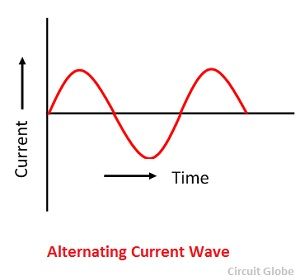
Imagen relacionada

Direct current

Between the terminals of a battery, there is a continuous, stable flow of energy
                                                       Resultado de imagen de direct current.

jueves, 30 de marzo de 2017

Combination circuit

A combination circuit has some elements connected in series and other elements connected in parallel.

In this type of circuit, the current remains constant between elements that are connected in series.

Combation circuits may connect both power sources and loads in different ways:

Parallel circuit

If identical batteries are connected in parallel, the voltage of the circuit will not increase. However, the total consumption of energy will be shared between the batteries, so each one will last longer.


Series circuit

Two or more elements form a series circuit when the output of one element provides the input for the next element.


To calcule the total resistance of a circuit, we add the resitance valvues of each load:

                                                          R=R1+R2+R3+...

One example of this type of connection would be a series of generators. The totral resistance woulbe the sum of all the resistance values.


miércoles, 29 de marzo de 2017

Electrical energy and power

Electrical energy

If an electric current flows at a  particular tension for a certain amount of time, we can calculate the energy that is consumed: E=V x I x t

In the SI, this electrical energy is measured in joules (J)

Electrical power

The elctric power of a load is the amount of energy that it can transform over a certain amount of time. Electric power is measured in watts (W) or kilowatts (kW).


Electrical resistance: Ohm's Law

The resistance of a material is equal to the voltage divided by the intensity of the electric current which travels throught the material. This ratio, which is called Ohm's Law, can be expressed as follows:

                                                                  R=V/I

                                                           
Ohm's Law has two forms:

                                                       V= RxI       and         I=V/R


martes, 28 de marzo de 2017

Measuring electric energy

Electric current is the charge or number of electrons that flow throught the coss section of a conductor every second. We can express this mathematically as foollow:
                                                                         
                                                                      I= Q/t

Elctric current is measured in amperes or amps in the international System or SI.